The Waters of the Body: Lymph Flow, Fascia, and the Slow Drain Pattern
Feeling puffy, heavy, or stuck? Learn how lymph flow works, why it can become sluggish, and what lymphatic drainage massage is designed to support.
Welcome to The Lymph Current!
My name is Yvette, and I’m a Certified Lymphedema Therapist (CLT). This article introduces what lymph is, how it moves, and why you might be interested in lymphatic drainage massage.
My practice is called The Lymph Current because lymph can be thought of, in practical terms, as the waters of the body.
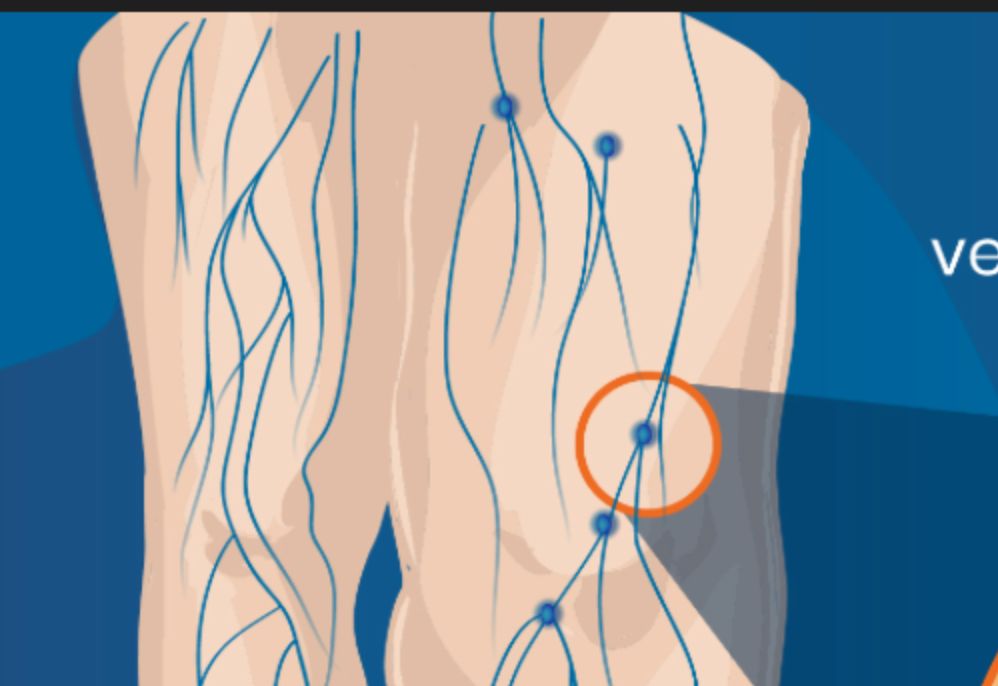
Anywhere you have blood, you also have lymph flow. It runs alongside the blood system in a way that’s almost mirrored, and there’s a reason for that: lymph is formed from interstitial fluid collected from the spaces around your cells and ultimately returned to the bloodstream.
So when I say “the waters of the body,” I mean it as a working image. And once you see it this way, it becomes easier to understand how lymph can slow down and feel backed up.
A Stream That Doesn’t Have a Pump
Blood circulates because of the pumping action of the heart. Although the pathways of lymph mirror the pathways of blood, the lymphatic system does NOT have a central pump. Instead, lymph moves based on pressure changes and movement, such as breathing, walking, muscle contractions, posture, and the overall condition of your tissue.
Which means: when the body is moving well and the tissues are supple, the current tends to move more easily.
When the surrounding tissue becomes restricted, the current can slow.
The Slow Drain
Lymph stagnation is rarely a dramatic blockage. It certainly CAN be, post-surgery for example, but most chronic lymphatic problems are more like a sink that drains a little slower every week… until one day you realize the water just isn’t moving like it used to. When lymphatic transport is truly impaired, fluid can accumulate in tissue and create the swelling recognized as lymphedema.
That’s how a lot of lymph stagnation builds. Not always from one big event, but from small, repeated patterns: sitting for hours, not sleeping, living in “go mode,” carrying low-grade inflammation without ever fully returning to restoration.
The body is fantastic at self-regulation when it’s given the conditions that support self-regulation. The issue is when the drain keeps running slow, and we normalize it.
What Contributes to “Slow Drain” Patterns?
There’s an array of foundations that can contribute to slow lymph drainage.
Sometimes it’s chronic sitting.
If you work at an office and sit for more than a few hours a day, stagnancy can build simply because of how chairs position the hips and groin region. You can end up compressing tissue in areas that matter for flow, and over time those pressure patterns add up.
Sometimes it’s stress and lack of sleep.
If you haven’t slept for days, or life is intense for a stretch, that can be a lot on the system.
Sometimes it’s fascial restriction. Long-held tension and stress patterns can influence how the body feels and moves.
Sometimes it’s chronic, low-grade inflammation.
Sometimes the cause of lymph stagnation is more clearly rooted in surgery. If you are actively healing from a procedure, choose Post-Surgical Lymphatic Drainage rather than Full-Body MLD so the session is planned around the affected areas.
Sometimes the diaphragm, an important driver of lymph movement, is restricted.
Tissue tells a story. A focused session can help identify where heaviness, tenderness, or restriction is most noticeable.
Lymph and Fascia: The Webbing and the Sand
We can’t speak honestly about lymph without bringing in its best friend: fascia.
Lymph moves through a body-wide environment shaped by fascia, the connective-tissue network that surrounds and supports muscles, organs, vessels, and other structures. An anatomical review describes the fascial system as a three-dimensional continuum extending from the skin to the bone and throughout the body.
Fascia is everywhere. If you could extract fascia from the body, you’d have a three-dimensional imprint of the entire body, and I mean everything: where you store fat, where muscles live, how structures are held together. It’s that extensive.
Here’s the simplest way I explain the relationship between lymph and fascia:
Imagine fascia like a strong piece of paper.
Now imagine lymph like sand.
If the paper is smooth, and you pour dry sand on it and then move it around, the sand flows right off. It doesn’t cling.
If that paper is crumpled or folded, however, small pockets can hold the sand as it moves.
That’s a practical way to understand stagnation: not because your body is failing, but because the terrain has changed.
And over time, if life stays in a chronic stress phase, a building phase, a phase where you’re not restoring yourself, your body may need support with self-regulation.
My Philosophy: Your Body Is Not the Enemy
This is the foundation of my work:
The body is not the enemy. The body is our deepest friend.
It’s always trying to restore you, replenish you, and keep you alive. It’s trying its best with the circumstances given.
Sometimes what the body needs is support, support that helps it do what it already wants to do.
That is where lymphatic drainage massage and fascia-focused work may complement each other: supporting fluid movement while addressing areas that feel dense, restricted, or slow to move.
If you are local
If you’re in Palatine, Chicago, or the northwest Chicago suburbs and you’re considering lymphatic drainage, compare the service paths before booking. Full-Body MLD is for clinical-wellness goals; active surgical recovery belongs under Post-Surgical Lymphatic Drainage.
About my training
I’m a Licensed Massage Therapist, Certified Lymphedema Therapist, and Certified Post Surgical Therapist. My training includes Manual Lymph Drainage, comprehensive lymphedema-care principles, post-surgical lymphatic care, fascia work, and fascial adhesions.
If you’re ready to support your body’s current again, I’d be happy to work with you.
Compare lymphatic services and book
Quick FAQ
Does lymph have a pump like the heart?
Blood is driven by the heart’s pumping action. Lymph doesn’t have a central pump in the same way; it relies on pressure changes, movement, breathing, and tissue conditions.
What can slow lymphatic flow feel like?
People describe it differently, but common themes include heaviness, puffiness, fullness, and a sense that fluid is not clearing as comfortably as usual.