Not sure which lymphatic drainage session to book? Start here
Learn what Manual Lymph Drainage is, why Vodder-based MLD is widely used, and how to choose a clinically trained lymphatic therapist in Palatine, IL.
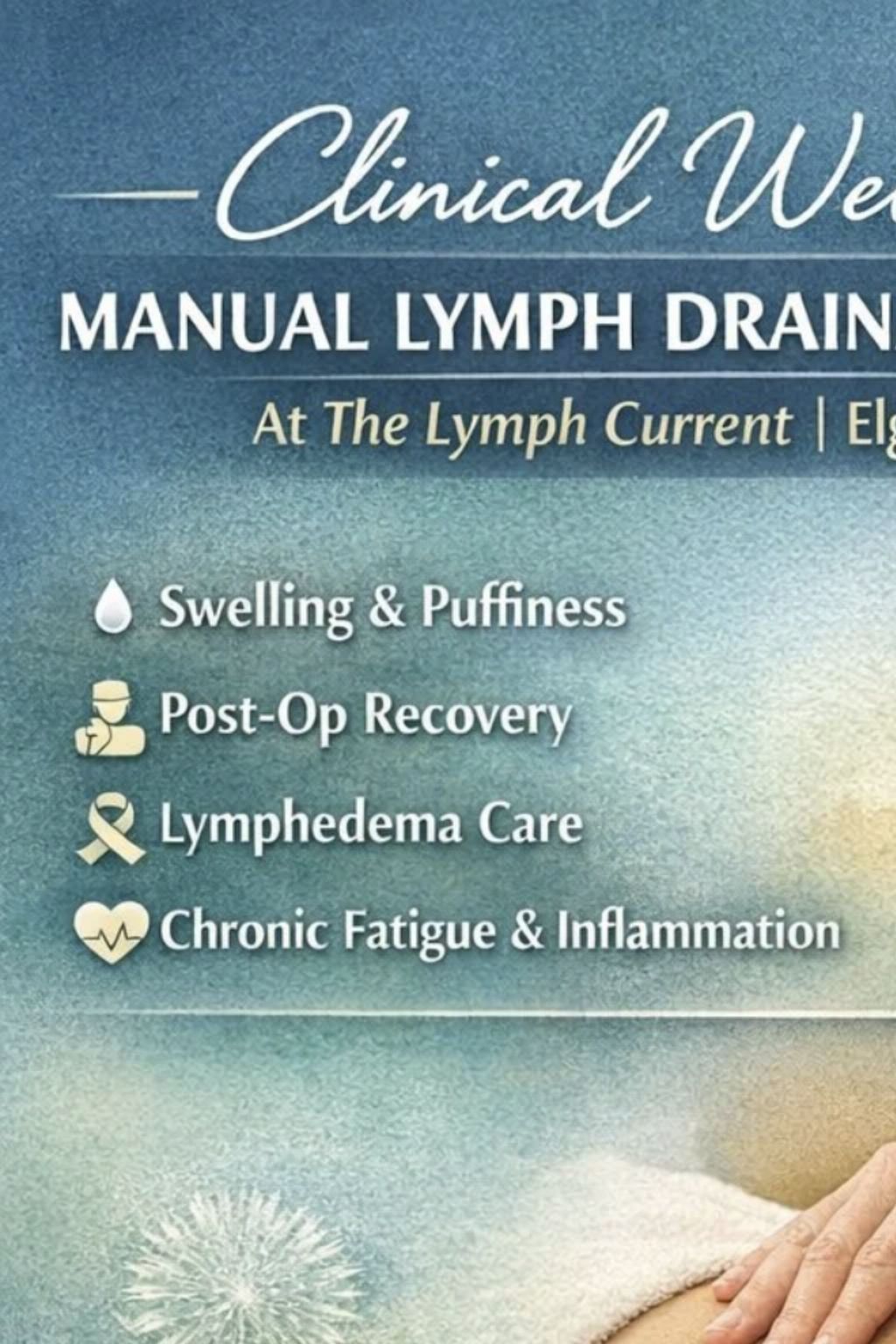
Welcome to The Lymph Current, a practice dedicated to All Things Lymph located in Palatine, IL.
Not sure which lymphatic drainage session to book?
Here’s a quick reference guide. For fellow lymph lovers who want the deeper details, the full breakdown is right below.
The Lymph Current is located at 630 N North Court, Suite 140, Palatine, IL
Choose Post-Surgical Lymphatic Drainage if you are healing from surgery
- Recovery-specific lymphatic drainage after cosmetic, reconstructive, or orthopedic surgery
- Localized care planned around the procedure and lymphatic areas affected
- Support for post-surgical swelling, fluid retention, tissue comfort, scar restriction, or fibrosis concerns
- A 60-minute Post-Surgical Session after one procedure or a 90-minute Extended Post-Surgical Session after two or more procedures; both include assessment and full hands-on treatment
- Care from a Certified Lymphedema Therapist with specialized post-surgical training
Explore Post-Surgical Lymphatic Drainage
Book Post-Surgical Lymphatic Drainage
Choose Full-Body Manual Lymph Drainage if you have not recently had surgery
Review the Full-Body Manual Lymph Drainage service page for the current session, pricing, and service comparisons.
- Help with heavy legs, puffy ankles, and “stuck” lower-body congestion
- Support for swelling, edema, puffiness, and fluid retention patterns
- Clinically grounded lymphatic care with a whole-body, pathway-based approach
- A whole-body approach that follows the lymphatic map rather than treating only one problem area
- Gentler pressure using light, precise, Vodder-informed strokes
- Full-body lymphatic wellness support when you have not recently had surgery
Book Full-Body Manual Lymph Drainage in Palatine, IL
All lymph work is led by a Certified Lymphedema Therapist (CLT) trained in comprehensive lymphedema-care principles.
The Lymph Current is located at 630 N North Court, Suite 140, Palatine, IL
The sections below explain how MLD works and why training matters.
What Manual Lymph Drainage (MLD) actually is
If you’ve ever searched “lymphatic drainage massage near me,” you have probably noticed that the word lymph appears everywhere. It is used on spa menus, in social-media trends, and alongside promises about detoxing, sculpting, and de-puffing. But a service labeled “lymphatic” is not automatically Manual Lymph Drainage. A brief demonstration with a dry brush is not a substitute for formal lymphatic education.
Manual Lymph Drainage has a long clinical history. It is grounded in anatomy, careful pressure, and a specific understanding of how fluid moves through lymphatic pathways. NCBI’s lymphatic anatomy overview explains how lymphatic capillaries collect interstitial fluid and how one-way vessels return it toward the venous system.
What MLD is
Manual Lymph Drainage (MLD) is a gentle, sequence-based technique designed to support the movement of lymphatic fluid through the body’s drainage pathways. It uses light, rhythmic skin-stretching movements because lymph vessels sit close to the surface. The National Cancer Institute similarly describes MLD as gentle massage that helps move lymph fluid within broader lymphedema care.
If you remember one thing, make it this:
MLD is about pathways, pressure, and sequencing.
- Pathways: where fluid is meant to go
- Pressure: light enough to work with the lymph vessels instead of collapsing them
- Sequencing: opening the right regions first so fluid actually has somewhere to move
If the lymphatic “drains” aren’t prepared, all the random strokes in the world won’t create meaningful lymphatic flow. If proper techniques are not used, fluid can be left behind in pockets. Real manual lymph drainage is a system approach, not a spot-treatment guess.
Why the Vodder method is widely used
There are several recognized approaches to Manual Lymph Drainage. The Dr. Vodder method is one of the most established structured systems and is widely taught in lymphedema education. It is methodical about direction, rhythm, sequencing, and pressure.
The Lymph Current is led by a Vodder-technique certified Manual Lymph Drainage therapist.
When we say Vodder-based technique, we’re not trying to sound fancy. We’re naming a method that has clinical roots, consistent standards, and a reputation that exists outside of trend culture.
In plain language: it’s not time to “just use a dry brush.” Lymphatic pathways are a map that must be primed and understood.
The clinical context: why MLD exists in medicine
MLD is most known as a core part of comprehensive lymphedema care. A 2024 expert consensus identifies examination, compression, manual techniques, exercise, skin care, education, and self-management as essential lymphedema-care components and recommends specifically trained practitioners. Lymphedema is swelling that happens when lymphatic transport is impaired and fluid accumulates in tissues. It can be primary (developmental) or secondary (after surgery, radiation, trauma, lymph node removal, cancer treatment, etc.). Over time, it can also involve tissue thickening and fibrosis.
MLD didn’t originate as a spa luxury. It exists because swelling can become chronic, complex, and medically significant.
A Certified Lymphedema Therapist (CLT) completes comprehensive education in lymphedema management and care principles, including Manual Lymph Drainage sequencing, swelling patterns, skin integrity, and safety screening. The Lymph Current is led by a Certified Lymphedema Therapist.
What “Full-Body MLD” means
Now let’s talk about why people book manual lymph drainage (MLD) even when they don’t have diagnosed lymphedema.
Full-Body MLD uses Vodder-informed, clinically grounded technique for fluid retention and everyday congestion patterns that make people feel:
- puffy, heavy, or “full”
- sluggish, stuck, or swollen after travel or long sitting
- inflamed or bogged down after stress seasons
- tender, thick, or congested in certain regions
- like their body is holding fluid retention and doesn’t clear easily
Full-Body MLD is intended for clients who are not actively healing from surgery. Surgery can alter local lymphatic pathways, so post-op clients should choose recovery-specific Post-Surgical Lymphatic Drainage.
Full-Body MLD should still be real MLD
It is intentional, pathway-based work built around lymphatic anatomy.
Light, specific strokes support fluid movement through the superficial lymphatic layer.
Each appointment follows a complete lymphatic sequence, with pressure, direction, and rhythm working together.
The phrase “lymphatic massage” has become a broad marketing term. Some services use that label without applying the pathway preparation, pressure, and sequencing that define Manual Lymph Drainage.
What it feels like
A real manual lymph drainage session is usually:
- gentle (sometimes surprisingly gentle)
- rhythmic and methodical
- calming for the nervous system
- comfortable and measured in pressure
People often leave feeling lighter, less pressurized, less puffy, and less “stuck.” Some notice visible changes quickly (especially with puffiness and fluid retention). Others notice change over a short series, especially if heaviness, edema, or tissue congestion has been building for a long time.
And because MLD is a whole-system approach, it often starts in areas people don’t expect. That’s not a mistake. That’s the drainage map doing its job.
Who Full-Body MLD can be a strong fit for
If you’re looking for manual lymph drainage (MLD) in Palatine, IL, Full-Body MLD can be a strong fit for:
- swelling, edema, puffiness, fluid retention
- heavy legs, tight calves, puffy ankles
- desk-job stagnation, chronic sitting, long shifts
- post-travel swelling and “airplane ankles”
- general swelling patterns that feel stubborn
- people looking for gentle lymphatic drainage massage with a calm, rhythmic approach
- tissue congestion that overlaps with fascia restriction and “stuck” areas
And for clients with diagnosed lymphedema or complex histories, CLT-led care matters even more because the technique, sequencing, and safety screening need to be correct. The research is not one-size-fits-all: a systematic review found that MLD outcomes varied by lymphedema stage and by how the technique was combined with other care.
Why training changes the outcome
Lymph work is one of the easiest things to market and one of the easiest things to do incorrectly.
A trained provider understands:
- how lymphatic drainage territories work
- why opening proximal regions first changes everything
- how light pressure creates better lymph response
- how to work with swelling patterns without irritating tissue
- how to modify for sensitivity, post-op timing, and complex cases
- what not to do, and when to refer out
- proper Vodder-based techniques so that fluid isn’t left in random, pocketed areas
This is the difference between “a relaxing massage” and “manual lymph drainage (MLD) that actually supports lymphatic flow.”
What I offer at The Lymph Current in Palatine, IL
The Lymph Current is a lymph-focused therapy practice in Palatine, IL serving nearby suburbs. It is CLT-led and rooted in manual lymph drainage (MLD), with Vodder-based technique as the clinical foundation.
The Lymph Current was built for people who want the real thing when they search “lymphatic drainage massage near me”: safe, structured lymphatic care that respects pathways, pressure, sequencing, and the reality of swelling patterns.
If your priority is gentle, pathway-based, system-wide support for swelling, fluid retention, or lymphatic wellness and you have not recently had surgery, Full-Body MLD is usually the right first step. If you are healing from surgery, choose Post-Surgical Lymphatic Drainage so your care is planned around the procedure and affected lymphatic areas.
If you want gentle, structured, Vodder-based manual lymph drainage (MLD) with CLT-level training, The Lymph Current offers a clear service path for both full-body lymphatic care and post-surgical recovery.
FAQ
Is MLD the same as “lymphatic drainage massage”?
The phrases are often used interchangeably online, but the training and technique behind a service can vary. Manual Lymph Drainage refers to specific pathway-based work using intentional pressure, rhythm, and sequencing.
How does MLD feel?
MLD is intentionally light, rhythmic, and directional, with pressure that stays close to the skin’s surface.
Can MLD help with post-op swelling?
Yes, but the correct service is Post-Surgical Lymphatic Drainage rather than Full-Body MLD. Post-surgical sessions use recovery-specific planning focused on the procedure and affected lymphatic areas.
How many sessions do I need?
It depends on your body, your swelling pattern, and your goal. Some people feel a shift immediately; others notice change over a short series. Your body sets the pace.